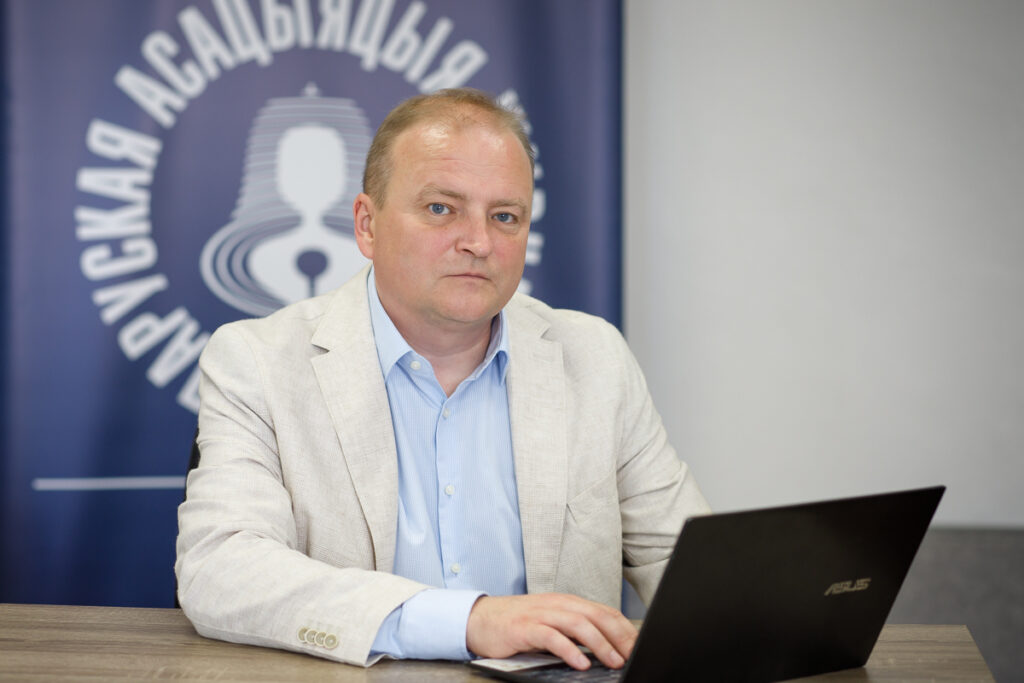
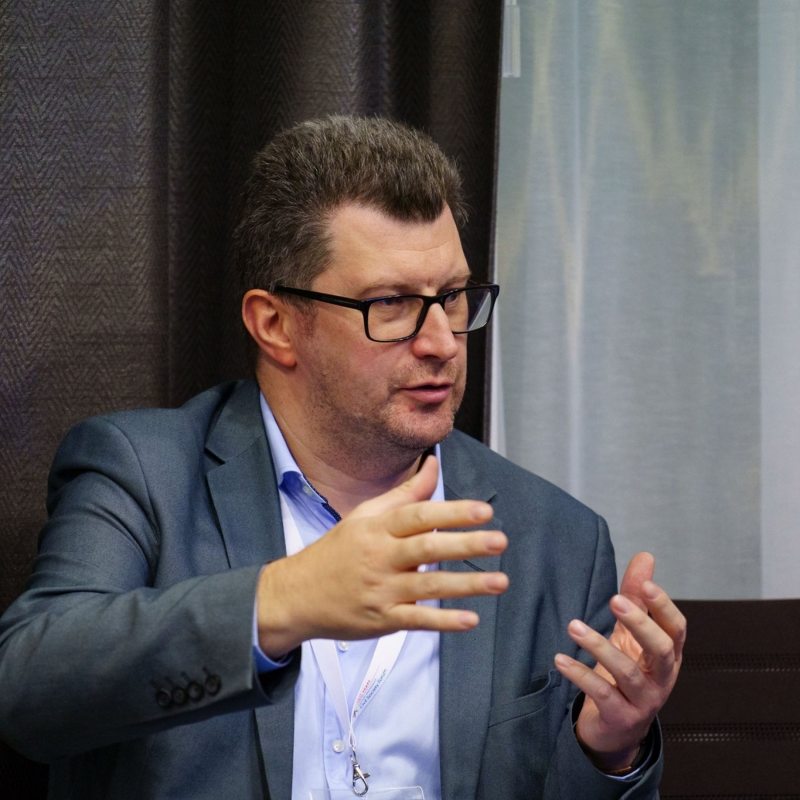
In 2022 all independent trade unions were liquidated and their head chairmen were put under arrest. However, Belarusian Congress of Democratic Trade Unions continues its work on the international level. In the interview, deputy chairman of BKDP, Siarhei Antusevich, told us about the way the trade union movement looks nowadays, the problems that workers face today and why Belarus fell under the unprecedented sanctions of the International Labour Organization (ILO).
Trade unions are the defence of the workers’ rights
– Mister Antusevich, what do trade union organisations generally do?
– The goal of trade unions is to protect the working rights of the citizens. This includes wages, working conditions, employment, the pension system and social security. In a normal situation in the country trade unions have a wide range of operations and an important instrument of influence on the lives of people.
– In spite of that, everything is different in Belarus. What happened in 2022?
– In July of 2022 every independent trade union was liquidated by a governmental decision. Our Belarusian Congress of Democratic Trade Unions (BKDP), which has existed since 1993, united four organisations: Belarusian Independent Union (BNP), Free Metalworkers’ Union (SPM), and the Belarusian trade Union of workers of radio electronic industry (REP). The entire leadership board of the congress, including its chairman, Aliaksandr Yarashuk, were arrested. Dozens of trade union leaders and activists remain behind bars to this day. The organisations were declared extremist. This is a classic scheme: if you defend people, you get political labels attached to you. In reality we were doing only one thing – defending workers’ rights. And that is what the authority fears the most: an organised, solidarity-based society.
Continuing our work on the international level
– Do trade unions still have any influence after the liquidation?
– Yes, they do. We continue our work on the international level. Our congress is a part of the international confederation of trade unions and has partnership connections with big global unions: IndustriALL, the European Trade Union Confederation, and numerous national trade union centres. The main venue where most events take place and important decisions are made remains the International Labour Organisation (ILO). It is important that the ILO and the international trade union community have not recognised the liquidation of the Belarusian Congress of Trade Unions. We continue to speak on behalf of Belarusian workers.
We are actively working outside of Belarus: we engage with the ILO on Belarusian issues, monitor labour legislation, and prepare alternative reports on the conventions that Belarus has ratified. Right now, for example, we have submitted our comments on the conventions under consideration this year, as well as on the fundamental conventions concerning freedom of association and the right to collective bargaining.
We present the situation in Belarus at special hearings of the ILO’s governing bodies – the International Labour Conference, which meets annually, and the Administrative Council, which meets four times a year in Geneva, Switzerland. At these meetings, we meet with Belarusian officials, who also report on the implementation of ILO conventions, but they do so formally, citing the number of meetings and collective agreements. And when we report on arrests, forced expulsion from professions, and violations of labour rights, they call us “a bunch of frauds.” Nevertheless, they are forced to listen to the truth.
Belarus is under Article 33, – an unprecedented case
– In 2023, Belarus was placed under Article 33 of the ILO Statute. What does this mean?
– This is an extraordinary measure that has only been used once in the history of the ILO (against the military junta in Myanmar (ed.). It provides that all ILO member states can apply measures of pressure against the offender, including political and economic sanctions. For Belarus, this could mean sanctions up to complete international isolation in the field of labour relations.
Reference
The International Labour Organization (ILO) is a specialized agency of the United Nations that deals with labour and social policy issues. Founded in 1919, it brings together 187 countries. Its core principles are freedom of association, the right to collective bargaining, and the prohibition of forced lab or and discrimination.
Article 33 of the ILO’s constitution is the organization’s highest sanction. It allows its member states to take action against a country that systematically violates conventions and ignores ILO decisions. It was applied to Belarus in 2023 – for the first time in Europe.
Within the country – bans on professions and forced layoffs
– And what is happening inside Belarus?
– The situation is very difficult. The majority of our members – more than 10,000 people – have remained in the country. We are maintaining contact, providing legal consultations, and offering assistance while maintaining the highest level of security.
People are being forced out of their jobs, and professional activity is often banned. This especially affects education, youth work, and state-owned enterprises. To get a job, they require a reference letter from your previous employer, and if the organization was liquidated as “extremist,” that’s impossible. Or, if you’ve been detained or participated in protests, you can’t get a decent job matching your education and qualifications. People are being deprived of the right to their profession.
– So many are forced to leave?
– Yes. Some people left for safety reasons, others because they couldn’t find work. And the wave of emigration isn’t subsiding. The problem is that with a “political article” or an “extremist” past, you can’t even get a regular job. It’s a system of discrimination that affects thousands of people.
Our goals are liberation and rehabilitation
– What goals is the trade union movement setting for itself today?
– The first and foremost is the release of political prisoners, including our leading chairmen. According to human rights defenders, there are more than 1,200 political prisoners in Belarus today, 21 of whom are trade union activists.
The second task is to restore the legal status of independent trade unions. We want Belarus to implement the ILO’s recommendations so that people can work without discrimination. This means rehabilitating everyone who has suffered for their civic stance and restoring their right to practice their profession.
We are realists, but we do see progress
– Is there any hope that the situation will change?
– We are realists and understand that this is going to be a long process. But the very fact that Belarus has been placed under Article 33 is a signal to the entire world. This is a precedent that the international community sees. We are on a unique path and are showing the world that even in the most difficult conditions, it is possible to continue fighting for labour rights.