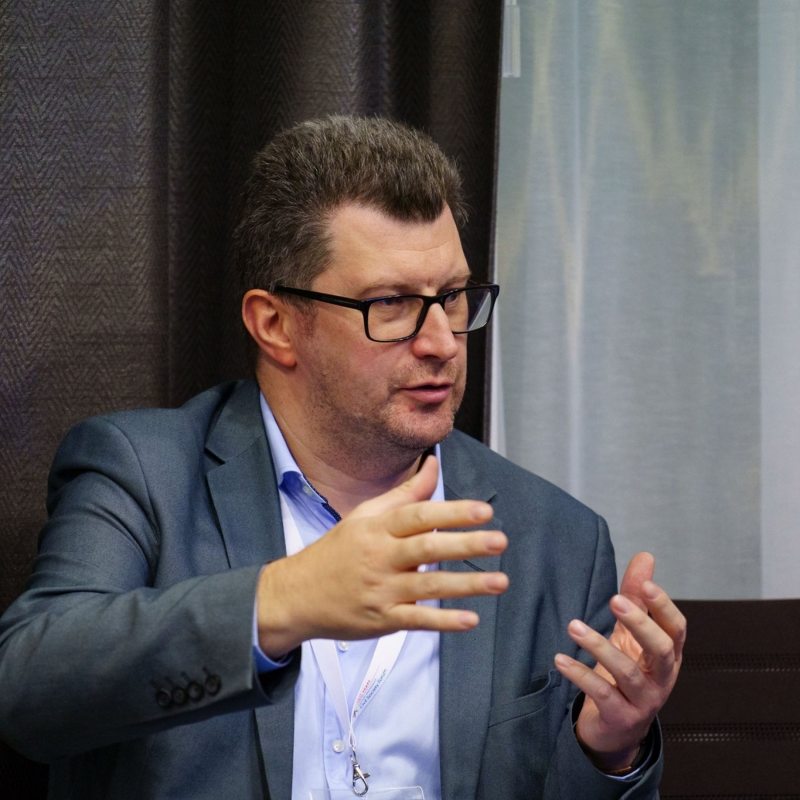
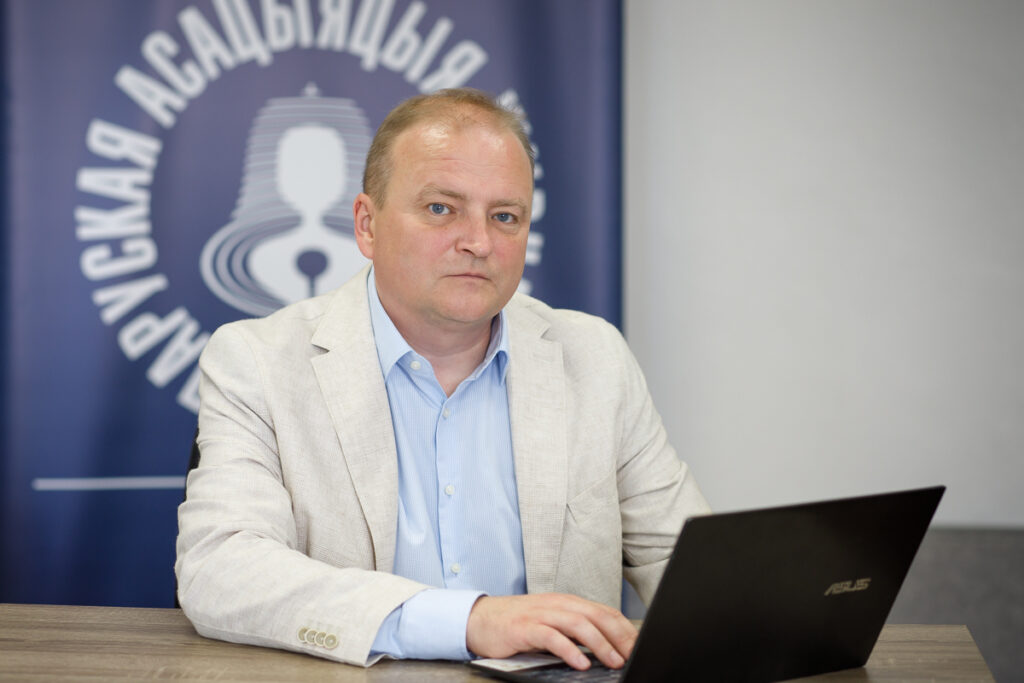
Aleh Aheyeu, Deputy Chairman of the Belarusian Association of Journalists, speaks about the state of independent journalism in Belarus.
As of today, all international media organisations regard journalism in Belarus as the most dangerous profession. It is the riskiest form of journalism in Europe. Around 40 politically imprisoned journalists are behind bars. Looking at the figures worldwide, only Myanmar and China have more imprisoned journalists than Belarus. And when adjusted for population size, the Lukashenko regime ranks a horrifying first in the world for arrests and detentions of journalists.
Journalists remaining in Belarus face repression almost every month: trials, administrative arrests and criminal sentences. A large number of detained journalists, like the majority of political prisoners, are subjected to torture while serving their sentences. This is a regime of incommunicado, detention conditions that fall under international definitions of torture, and the open use of violence against journalists during arrests and interrogations.
Journalists who have immigrated abroad are being prosecuted through a special procedure – absentee trials. These are criminal proceedings that involve interrogations of relatives, searches of homes, seizures of property and confiscation, including real estate, and lengthy ex parte sentences.
Everything is complicated even more by the fact that, to date, there are no effective mechanisms for protecting rights in Belarus. Both the courts and the prosecution, which in normal countries are supposed to protect rights, in Belarus have become links in a chain of repression, where seeking protection is currently pointless.
Moreover, international protection mechanisms are almost unavailable in Belarus, as the country is not an ally of the Council of Europe. Accordingly, the European Court of Human Rights is inaccessible to people in Belarus. The Lukashenko regime denounced the First Optional Protocol to the International Covenant on Civil and Political Rights, and the UN Human Rights Committee has likewise become inaccessible to us. As of today, there are no international legal mechanisms to which Belarusians can turn for an individual application at an international level to protect their rights.
As for the editorial offices, to date almost the entire independent media sector with a socio-political focus in its content has been designated as extremist organisations in Belarus. The websites are blocked, and the editorial offices are forced to operate in exile: most are based in Lithuania and Poland.
And in such conditions, despite persecution, an atmosphere of fear through mass terror, pressure on relatives, on the journalists themselves, and absurdly long prison sentences, the media sector in Belarus endures. It continues to report on current events, countering the propaganda that underpins both the Lukashenko regime and the Kremlin’s propaganda, which has, to date, flooded our country.
Social surveys show that trust in the media sector remains high among audiences both inside and outside Belarus. The work continues, and everything is being done to ensure the Belarusian public knows the truth.
The cessation of US funding has had a severe and painful impact on the media sector. Many small newsrooms are at the stage of deciding to close; we are seeing journalists being made redundant and staff numbers being reduced – from dismissals to unpaid leave.
Nevertheless, given the extremist status, the inability to profit from the part of the audience within Belarus, and the inability to monetise content, despite the pressure and persecution, and the futility of commercial advertising, people in the Belarusian media sector selflessly continue to do their work.
What are the main tasks facing BAoJ at the moment?
It has now been four years since we were deregistered in Belarus. We were a registered, officially operating organisation. However, despite being deregistered, and in line with the standards of freedom of association, we decided to continue our operation. It became more difficult when we were designated an extremist organisation.
BJA is based in Vilnius, has an office here, and continues its work of defending journalists’ rights, assisting political prisoners, and improving the quality of journalism.
One of our main achievements this year is the creation of the Media Assembly. We developed and proposed to the media sector to join the new Media Ethics Code and the Agreement on the establishment of a self-regulatory body. Together we created the Media Assembly. This also demonstrates the resilience of ties within the media sector, the trust that newsrooms have in us, and that the newsrooms themselves understand that adversity is better overcome together. Together, we are also trying to survive and to continue our work to inform the Belarusian public, both in Belarus and in exile, to a high standard.
BAoJ is celebrating its 30th anniversary this year. What would be the best gift for you?
Undoubtedly, freedom for journalists imprisoned for political reasons! Around forty people are behind bars – and we’re hurting for each one! Our friends, our colleagues are there, and we’re doing everything we can to get them out as soon as possible so they can go on with their work.
Photo: https://baj.media